Skip to content

Skin Files · Peptides

Copper peptides for skin: what GHK-Cu does and what it doesn't

Copper peptide serums are one of the fastest-rising skincare searches. What GHK-Cu is, what the research supports, how The Ordinary-style serums fit in, and who should be careful.

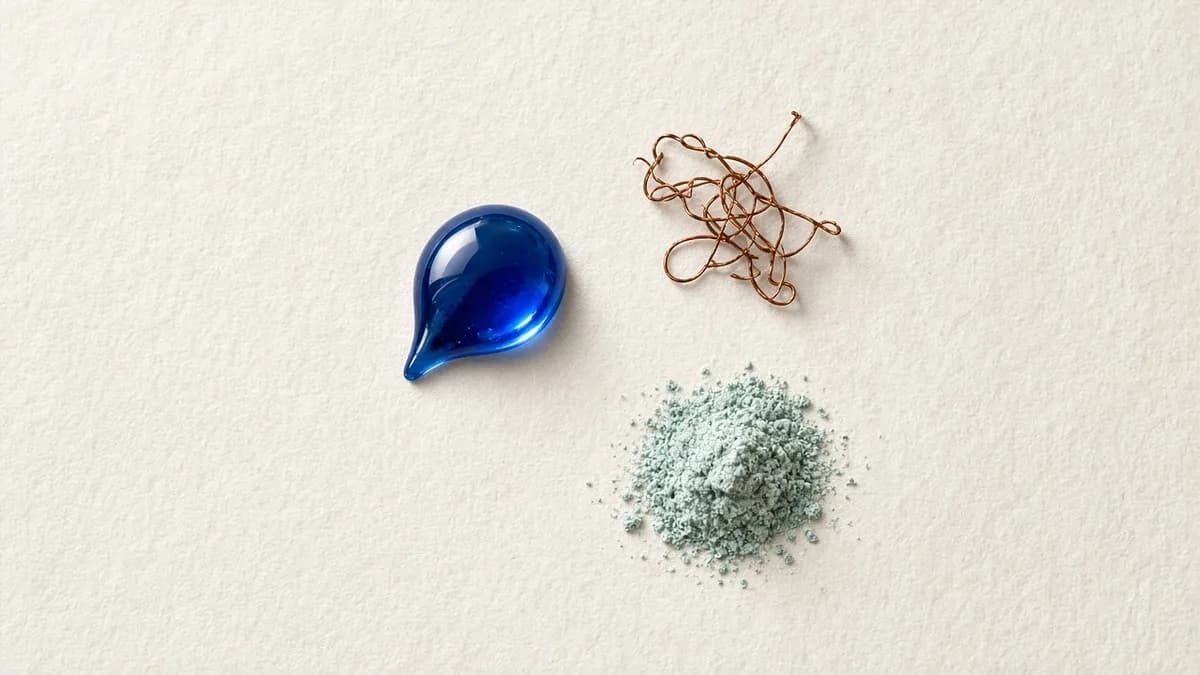
A glossy sapphire-blue serum drop beside curls of fine copper wire and a small mound of blue-green powder
Illustrative image

01 · The short version

"Copper peptides" and "GHK-Cu" are rising fast in US searches, along with questions like "what do copper peptides do" and searches for specific serums. The blue-tinted serums have become a status item.

GHK-Cu is a tiny three-amino-acid peptide that carries copper. It occurs naturally in the body, and levels fall with age, which is the hook for most of the marketing.

02 · What the research shows

The strongest data on GHK-Cu come from lab work and wound healing: it supports cell signals involved in repair, collagen and antioxidant defense. Gene studies suggest it nudges many repair-related pathways at once.

For cosmetic serums, the human evidence is thinner. Small older studies of copper peptide creams reported improvements in skin texture and fine lines, but most were not published in full or not placebo-controlled. Modern, independent trials of today's popular serums are lacking.

03 · Copper peptides for hair

"Copper peptides for hair" is a big search too. Copper peptides appear in scalp serums, and lab studies are interesting, but there's no good human evidence that they regrow hair. For thinning hair, minoxidil has the evidence; talk to a dermatologist.

04 · How to use a copper peptide serum

  • Once a day is plenty, morning or night, on clean skin before moisturizer.
  • Use it on a different routine slot from strong acids (AHA, BHA) to keep irritation down.
  • Vitamin C and copper peptides are often said to cancel each other out. That's a lab-chemistry concern without clinical data; separating them (vitamin C in the morning, copper at night) is an easy way to stop worrying about it.
  • Patch test first. Copper can irritate some people, and blends often include other actives.

05 · The science

GHK binds copper tightly and can deliver it to tissues. In lab and animal studies, GHK-Cu increases collagen and glycosaminoglycan production and supports wound repair. Those findings explain the interest, but lab results often shrink or disappear when a cream is tested on faces.

06 · What might help

  • Supporting the look of smoother, firmer skin in a well-made serum.limited evidence
  • Wound repair (medical and lab settings, not cosmetic serums).limited evidence
  • Regrowing hair on the scalp.insufficient evidence

07 · Myths, checked

  • “Copper peptides are a natural alternative to retinol.”

    They're gentler, but they don't have retinol's body of controlled trials.

    insufficient evidence

  • “You should inject GHK-Cu for better results.”

    Injected GHK-Cu is not an approved product and the FDA has flagged safety concerns. It's a different thing from a serum.

    insufficient evidence

08 · Insufficient evidence

  • Copper peptide serums beating retinoids for wrinkles.
  • Copper peptides for hair regrowth.

09 · How to use it

  • One copper peptide product, once a day.
  • Separate from strong acids; vitamin C in the other half of the day if you like.

The Receipt

  1. 01GHK-Cu has interesting biology and limited cosmetic trials.
  2. 02A reasonable, gentle add-on, not a replacement for sunscreen or retinoids.
  3. 03Skip the injections.

Education, not a diagnosis. If something changes quickly, hurts, bleeds, or worries you, see a dermatologist.

Questions people ask

What do copper peptides do for skin?
They deliver copper and send repair-related signals. Lab studies show more collagen production; human evidence for cosmetic serums is limited and mostly small.
Can you use copper peptides with vitamin C?
There's a theoretical chemistry concern but no clinical data. If you want to be safe, use vitamin C in the morning and copper peptides at night.
Can you use copper peptides with retinol?
Many people do. If your skin gets irritated, alternate nights.
Do copper peptides help hair growth?
There's no good human evidence yet. For hair loss, see a dermatologist about proven options.
Sources (5)
  1. Pickart L, Margolina A. Regenerative and protective actions of the GHK-Cu peptide in the light of the new gene data. Int J Mol Sci. 2018.
  2. Pickart L, Vasquez-Soltero JM, Margolina A. GHK peptide as a natural modulator of multiple cellular pathways in skin regeneration. Biomed Res Int. 2015.
  3. Gorouhi F, Maibach HI. Role of topical peptides in preventing or treating aged skin. Int J Cosmet Sci. 2009.
  4. Errante F, et al. Cosmeceutical peptides in the framework of sustainable wellness economy. Front Chem. 2020.
  5. U.S. FDA. Certain bulk drug substances for use in compounding that may present significant safety risks (includes GHK-Cu for injectable routes).

Your receipt, next

See what your skin is actually asking for.

Scan your skin for free and get a plain-English receipt with the evidence attached. No account needed.

Trend Receipts, by email

Occasional notes, no weekly blast. See our privacy page.