The Receipt
- 01A reasonable morning antioxidant with modest results. Formula and storage matter more than the percentage on the label.
Education, not a diagnosis. If something changes quickly, hurts, bleeds, or worries you, see a dermatologist.
Ingredient Receipt · Antioxidants
INCI: Ascorbic Acid, Sodium Ascorbyl Phosphate, Magnesium Ascorbyl Phosphate, Ascorbyl Glucoside, Tetrahexyldecyl Ascorbate
Vitamin C is an antioxidant used for brightness, uneven tone and sun-damage support. Which forms have evidence, why it oxidizes, and how to fit it into a routine.
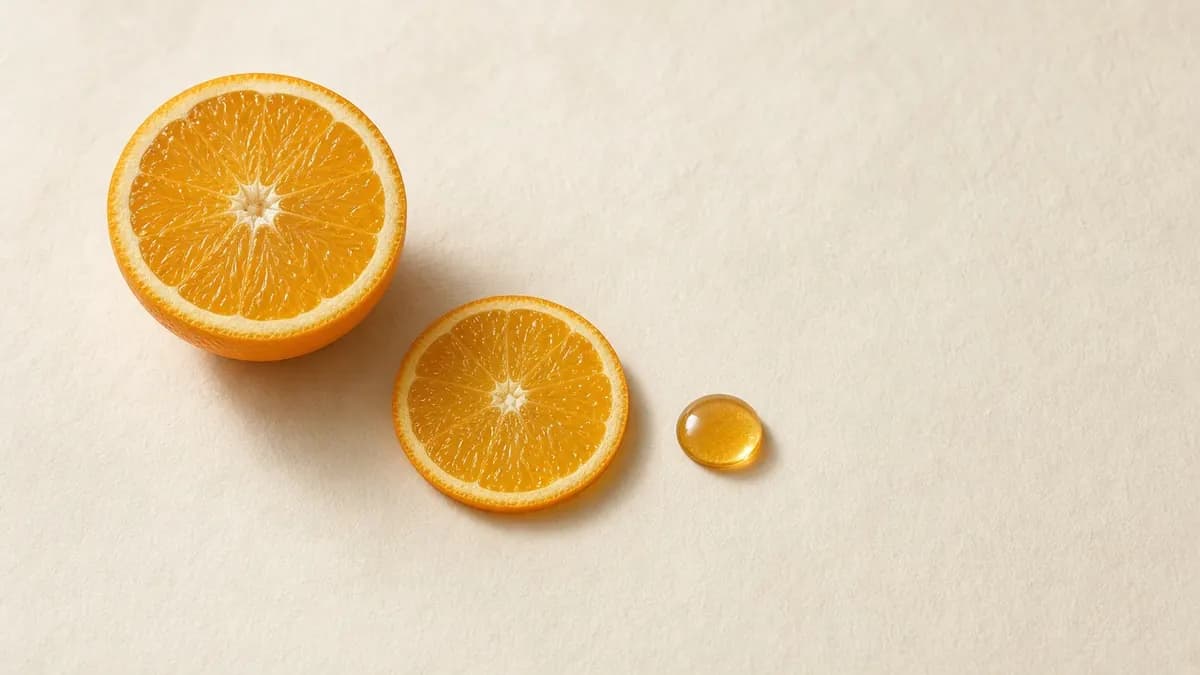
Vitamin C serums are popular for “glow” and dark spots. The evidence is real but modest, and depends a lot on the form and the formula.
Vitamin C is an antioxidant that helps neutralize free radicals, including those generated by UV exposure. It’s also needed for collagen production and interferes with melanin production.
L-ascorbic acid is the best-studied form but is unstable. It oxidizes (often turning yellow or brown) with air, light and heat. Derivatives are more stable but have less clinical data.
It isn’t a sunscreen. It may add to the protection sunscreen gives.
“Higher percentage is always better.”
Studied L-ascorbic acid serums often sit around 10–20%. Going higher mostly increases irritation without clear extra benefit.
limited evidence
“Vitamin C replaces sunscreen.”
It doesn’t absorb UV like a sunscreen filter. Use both.
well-supported
The Receipt
Education, not a diagnosis. If something changes quickly, hurts, bleeds, or worries you, see a dermatologist.
Your receipt, next
Scan your skin for free and get a plain-English receipt with the evidence attached. No account needed.
Trend Receipts, by email
Occasional notes, no weekly blast. See our privacy page.